AI Assistance
Draft detailed, client-ready time entry descriptions using built-in prompts while leveraging application wide AI to generate data-driven insights, analyze posting pace, track metrics, and build custom billing charts.
Aprotime helps your firm model a project’s profitability and set realization and margin targets before you sign, capture every billable hour as the work happens, draft the entries with AI, and carry the pre-bill through review and approval, then invoice and collect in Aprotime, or alongside the accounting system your firm already runs, through Aprotime’s API and integration suite.
Your AI Proxy detected 4.5 missing hours from yesterday.
Total tracked: 26.5h logged manually, 8h proxy-generated.
 Jane Carmal

 Frank Joe
Track and Manage Billable Time Across Every Environment

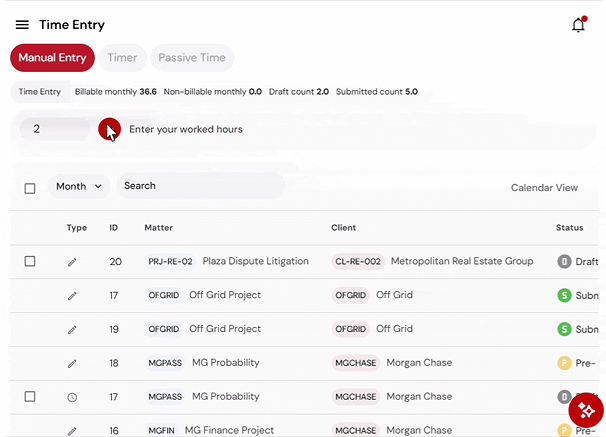
Manage organization-wide time cards, prebilling workflows, and financial reports from any browser dashboard.
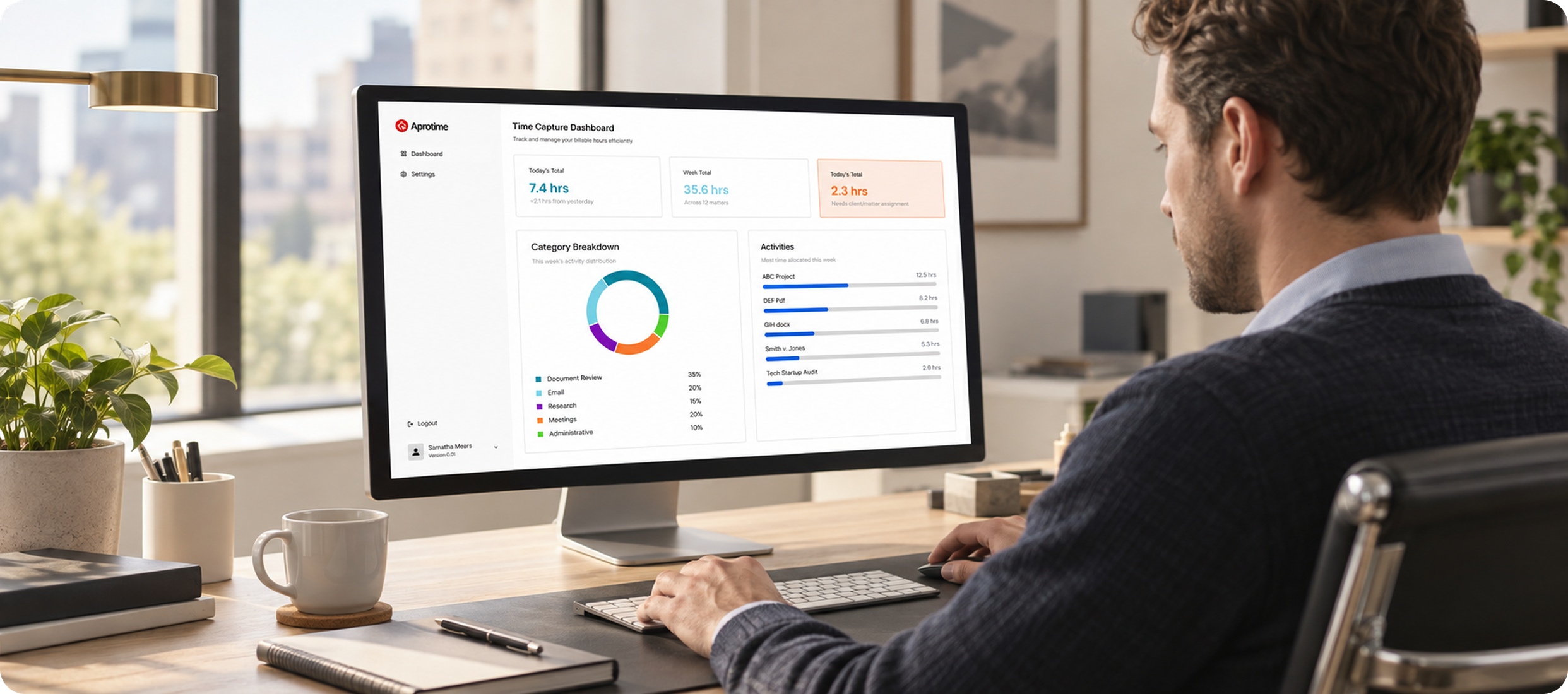
Run live timers, log activity, and capture background desktop work while maintaining focus on active client work.
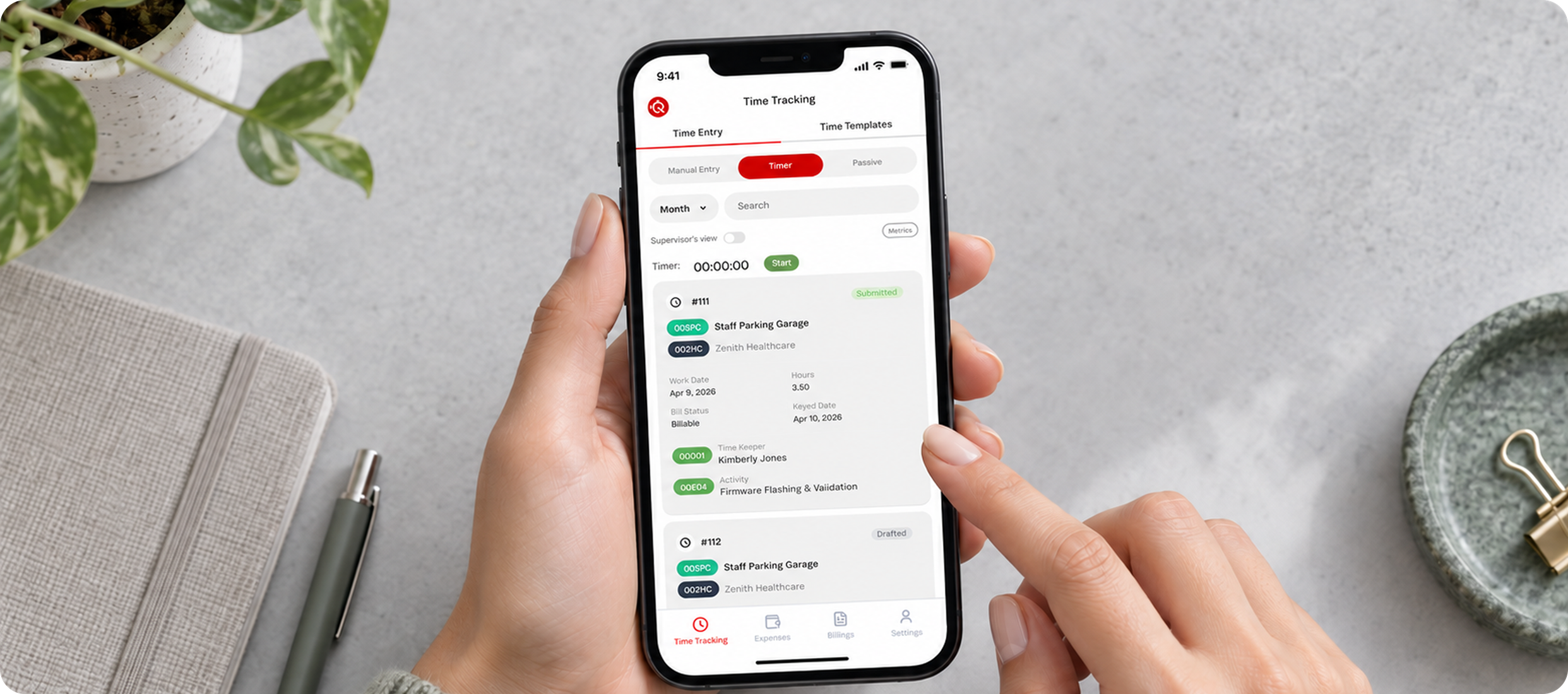
Track continuous timers, log project expenses, and approve time cards on iOS or Android.

Log hours in offline environments and automatically sync entries to cloud or private servers once reconnected to your desktop or mobile.












Draft detailed, client-ready time entry descriptions using built-in prompts while leveraging application wide AI to generate data-driven insights, analyze posting pace, track metrics, and build custom billing charts.
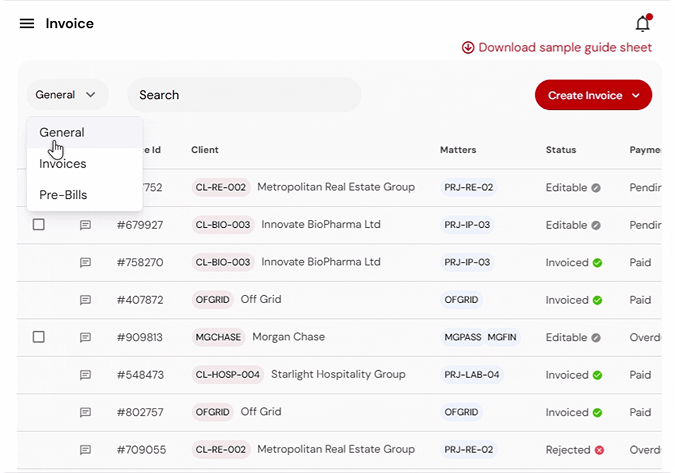
Audit hours during prebilling, track and process reimbursable project expenses, and issue client invoices directly from logged time entries, to streamline payment collection.
Simulate project costs prior to client calls, monitor drawdown rates on active retainers, and receive automated threshold alerts before exceeding budget limits.

Designed for large legal, accounting, and professional service organizations that require custom data schemas, complex legacy migrations, open API integrations, and flexible hosting options:
Designed for mid-market agencies and professional service teams seeking standard time tracking with rapid setup. Register an account, configure your workspace, and start tracking time immediately.
Aprotime is time-to-cash software for legal, accounting, and professional services firms. It covers the full cycle (pricing and budgeting a project, capturing time, prebilling, invoicing, and payment collection) in one system. Its aim is to shorten the time between committing to work and receiving payment for it. Larger firms can run the earlier stages in Aprotime and finish invoicing in their own accounting system.
Time to cash is the elapsed time between a firm committing to billable work and receiving payment for it. It begins at pricing (the estimate, realization target, and budget set before signing) and runs through capture, prebill review, invoicing, and collection. Every delay or leak along that chain pushes the payment date later or shrinks what arrives.
Before a client agreement is signed, Aprotime lets you simulate a project (resource ranks and mix, fee structures, estimated disbursements, and what the work will actually cost to deliver) and calculate its expected net profit margin. You can run several scenarios side by side and compare how staffing or fee choices change the economics. The point is to sign work whose profitability you have already examined, not discovered afterwards.
When a project is modelled, you set target margins and realization rates: how much of the recorded value the firm expects to bill and collect. Those targets can be adjusted dynamically as scope changes, and they establish the pricing model and revenue baseline the project is later measured against. Slippage against a named target becomes visible during delivery, not at year-end.
Passive capture is an optional feature that records desktop and Microsoft 365 activity in the background and assembles it into a timeline the timekeeper uses to build their timesheet. The timekeeper has total privacy control: they choose to enable it, can turn it off, and review everything before anything becomes an entry. If a firm or an individual does not want it used, it does not have to be.
Timekeepers record time with live timers or manual entry, use reusable templates for recurring work, and can enable optional passive capture of desktop and Microsoft 365 activity as a drafting aid. Work is tracked across platforms, including offline, and syncs when a connection returns. AI-assisted drafting then helps turn recorded activity into clear, client-ready entries.
It generates client-ready time-entry descriptions from a timekeeper’s activity and notes, so entries start as clear billing narratives instead of rough shorthand. The timekeeper reviews, edits, and approves every draft before it is logged; the AI proposes, the professional decides. Clearer narratives earlier also mean less rewriting during prebill review.
Firm leaders and billing teams can query operational data directly, and the AI analyzes what it finds: posting speed, unbilled hours, trends, and revenue leakage. It can build custom billing charts and generate executive summaries from that analysis. It is an interrogation layer over the firm’s own time and billing data, not a generic chatbot bolted on.
Yes. Aprotime supports cross-platform, offline time tracking, and entries sync automatically when connectivity returns. Travel, court, client sites, or poor connectivity do not have to mean reconstructed time entries at the end of the week.
Prebilling is the review of draft charges before a final invoice is issued. Billers generate and preview the prebill and route it through configurable approval stages to the responsible attorneys or approvers; reviewers’ comments and edits stay attached to the record, instead of circulating as PDF markups by email.
Once a prebill is approved, it can become an invoice in Aprotime: invoices are generated and sent to clients from Aprotime, and collections are tracked there, with aging and collection views showing which invoices remain unpaid and for how long, until they are paid. Firms that invoice from their own accounting system can keep doing so instead. Either way, billing and finance teams follow an amount from draft charge to payment without re-keying.
Aprotime manages time capture and the pre-bill, and it is built to work alongside the systems firms already run: it connects to existing accounting and enterprise platforms through its API and custom integration suite, so your invoicing arrangements don’t have to change to fix your time capture and pre-billing. Firms that prefer it can run invoicing and collections inside Aprotime itself. How the handover works for your stack is a good demo conversation.
Aprotime is available as multi-tenant cloud, on dedicated private hosting, or self-hosted, including Kubernetes deployment. Firms choose the model that fits their IT, security, and client obligations. The choice of deployment does not change the core workflow.
Enterprise teams can schedule a demo to structure a proof of concept. That gives the firm a scoped evaluation on its own processes rather than a generic walkthrough. Use it to test the areas that matter most to you, for example, scenario pricing on a real project, the collaborative prebill workflow, or deployment.
Accelerate your time to cash cycle with instant direct access setup or schedule an enterprise demo to structure a proof-of-concept evaluation.